Machine learning as an engineering decision layer
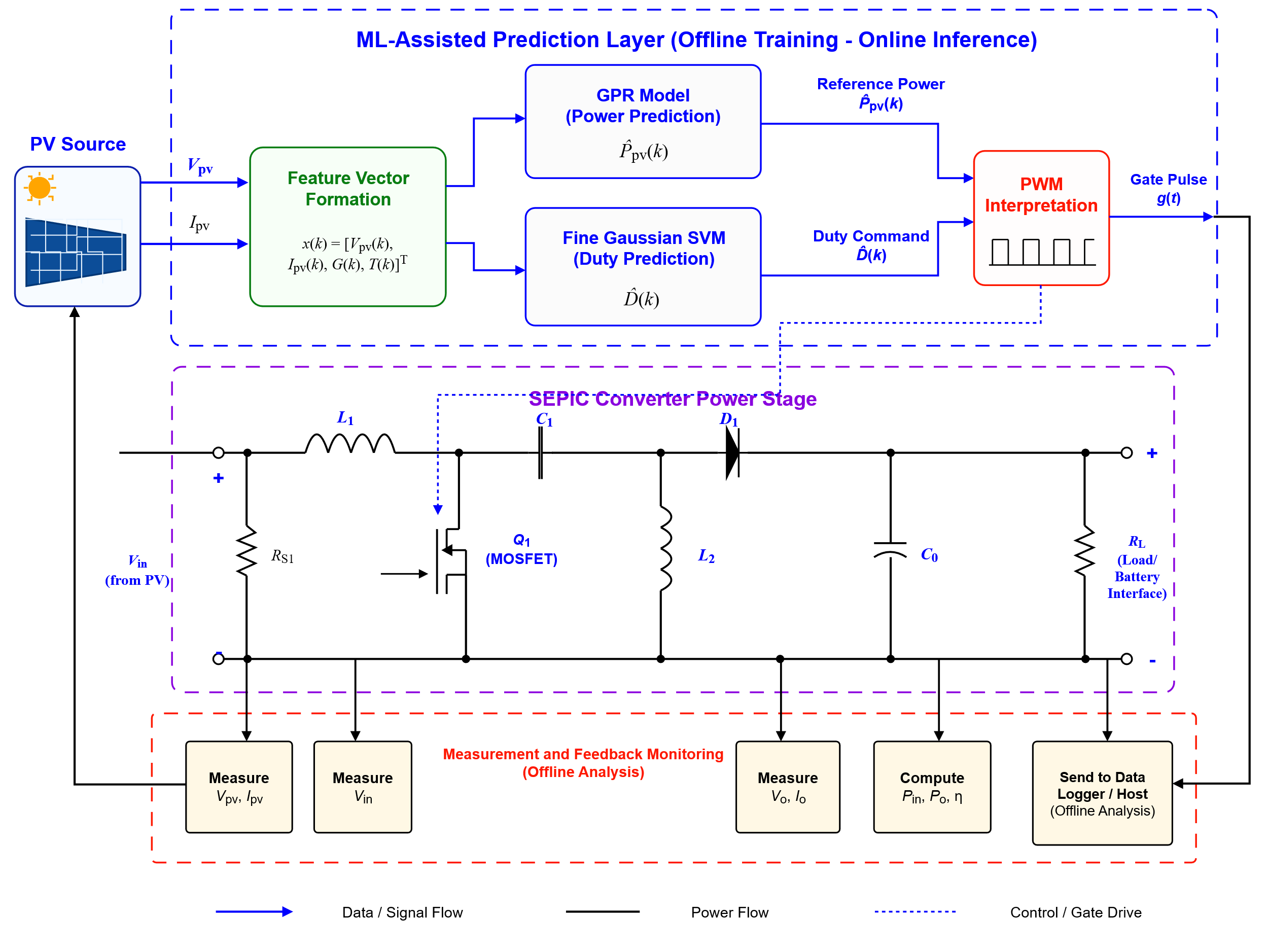
The AI card uses the selected figures where learning models directly affect power-system or converter decisions. The GPR-SVM workflow shows a clear prediction chain for PV-fed SEPIC operation. The WNN surfaces and duty-cycle response figures show how model structure, hyperparameters, and residual behavior decide whether a learned controller is reliable enough for storage and converter applications.
Across these works, AI is not presented as a generic add-on. GPR estimates reference power, SVM generates duty-cycle decisions, and WNN models support degradation-aware SoC prediction as well as pseudo-centralized droop control. The hyperparameter surfaces matter because they reveal the tradeoff between model capacity and prediction error. The duty-cycle response matters because it turns a learned estimate into the signal that an embedded or converter controller must actually use.
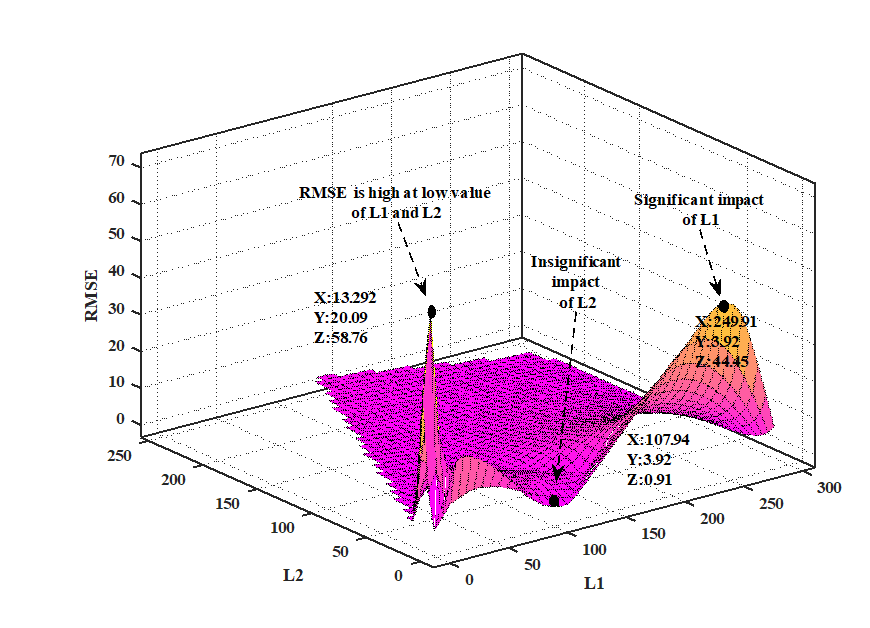
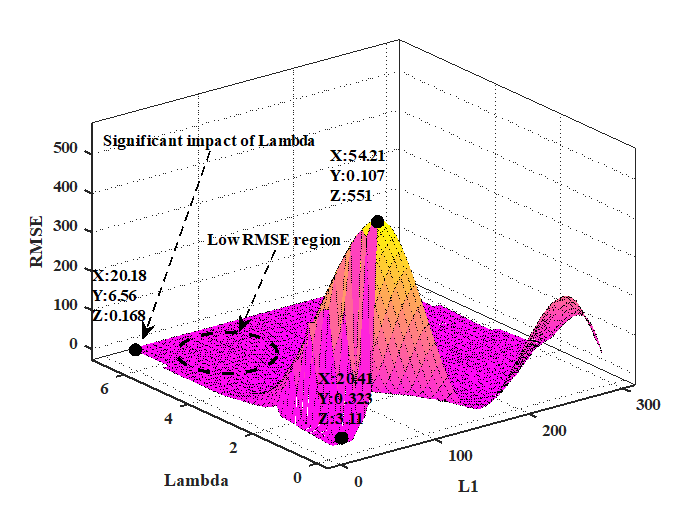
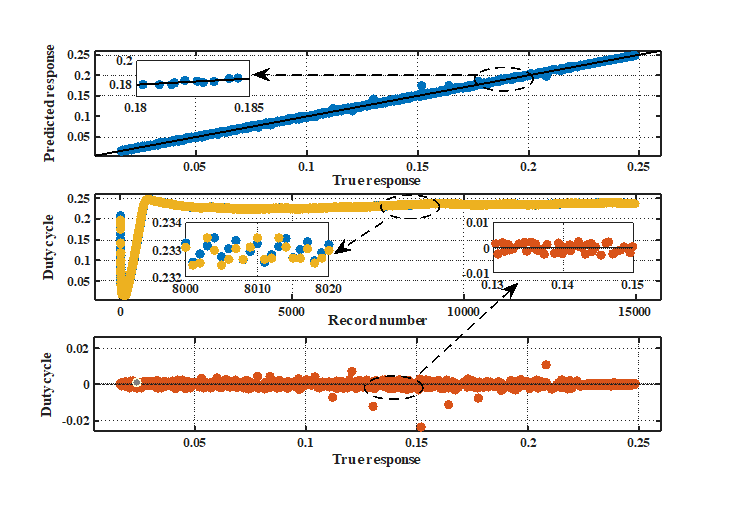
This gives the research portfolio a strong AI-engineering position: model choice is evaluated through electrical behavior, not only through abstract accuracy. Future work can naturally expand toward fault localization, predictive control, feature selection, model compression for embedded deployment, and interpretable AI for reviewers, collaborators, and research scholars.
- Fault detection
- Parameter estimation
- Predictive control
- Scientific figure and data interpretation