

Research Domains
Microgrids, energy storage, EVs, power electronics, AI diagnostics, and real-time control are grouped by problem domain.
Associate Professor (Grade 1), School of Electrical Engineering
Power electronics, intelligent energy systems, real-time control, and AI-enabled energy conversion for resilient electric power infrastructure.
The site separates academic profile, research domains, service capabilities, laboratory facilities, opportunities, publications, and enquiry routes so each audience can move quickly.
Microgrids, energy storage, EVs, power electronics, AI diagnostics, and real-time control are grouped by problem domain.
Concept, simulation, converter, SPICE, PCB, embedded, dSPACE, prototype, and documentation support are scoped clearly.
PhD scholars, B.Tech projects, internships, project positions, and mentoring routes are presented with consent-aware boundaries.
Consultancy, publication ethics, privacy, student consent, IP, and institutional-affiliation limits are made explicit.
Each theme is designed to expand into current problems, proposed approaches, representative results, publications, scholars, and collaboration invitations.
Distributed control, droop control, synthetic inertia, frequency support, and stability enhancement for grid-forming and hybrid microgrids.
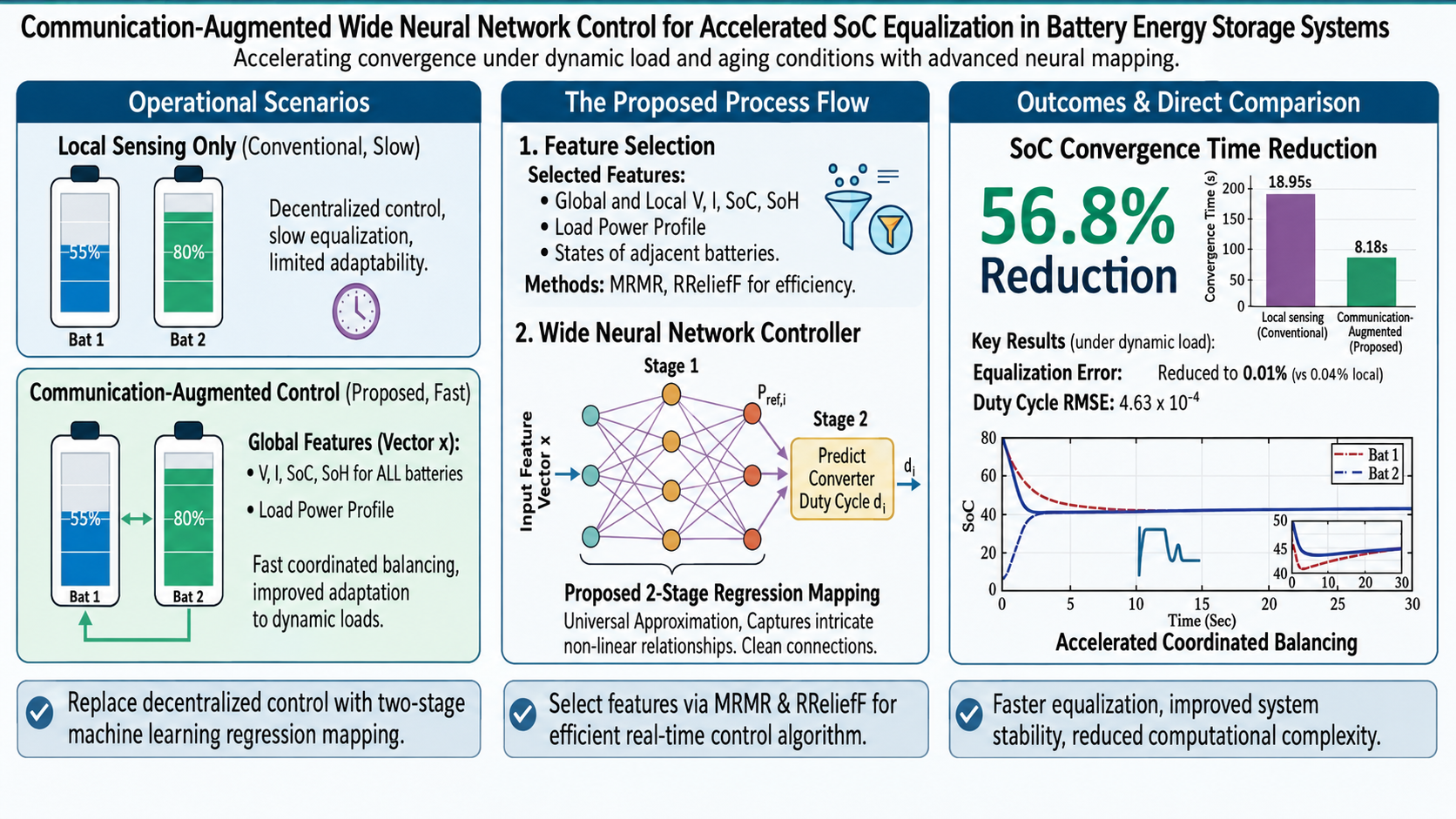
State estimation, degradation-aware prediction, battery equalization, and machine-learning diagnostics for storage-intensive energy systems.
Electric drivetrain, torque control, converter control, battery management, and energy optimization for intelligent transportation systems.
DC-DC converters, inverter design, grid-connected converters, PWM strategies, protection, and converter loss reduction.
Machine-learning and predictive-control techniques for power systems, battery systems, fault localization, and renewable-energy control.
Rapid control prototyping and hardware validation using dSPACE DS1103, STM32, ARM Cortex, TI C2000, MATLAB, and Simulink.
The strongest service differentiator is continuity: feasibility, modelling, simulation validation, design, firmware, rapid prototyping, hardware mapping, and ethical documentation.
Early-stage technical idea review, system-requirement identification, mathematical formulation, topology selection, technical-risk mapping, and development-roadmap preparation.
Dynamic modelling, converter simulation, control-system development, battery and EV drivetrain modelling, microgrid studies, renewable-system simulation, and automation.
Translation of an engineering concept into a testable model with baseline/proposed comparison, sensitivity analysis, fault-condition studies, and limitation identification.
DC-DC, single-phase, three-phase, grid-connected, isolated, and bidirectional converter design with component sizing, filter design, protection planning, and efficiency estimation.
Switching analysis, semiconductor stress review, gate-driver verification, transient studies, snubber validation, start-up behaviour, and tolerance analysis.
Power-stage schematic review, gate-driver and sensing interfaces, high-current layout, isolation clearance, EMI-aware routing, Gerber review, and manufacturing documentation.
Student pages and project showcases are designed to publish only reviewed, consented, and professionally useful information.
Battery energy storage, neural-network control, and energy-storage characterization
CV meeting completed
Microgrid control, resilient operation, and advanced power-management strategies
DC meeting completedProspective PhD scholars, interns, project teams, visiting researchers, and industry collaborators can use dedicated enquiry paths.
Explore opportunitiesIEEE Access - 2026
Energy Reports - 2026
Scientific Reports - 2026
Journal of Energy Storage - 2025
Recognition for publications, funded research, patents, technology transfer, and consultancy contributions.
Promoted at VIT Chennai, School of Electrical Engineering, effective 1 July 2026.
Communication-augmented wide neural network control for accelerated SoC equalization in battery energy storage systems.
Consultancy, PhD, internship, collaboration, and academic requests are separated so the first response can be faster and more useful.