Microgrid control with storage-aware intelligence
This domain begins with the architecture of AC, DC, and hybrid microgrids, then moves toward the control decisions that make those systems stable when storage, renewables, and switching loads interact. The visual thread is storage-side droop control, because battery behavior is often where a microgrid quietly gains or loses resilience.
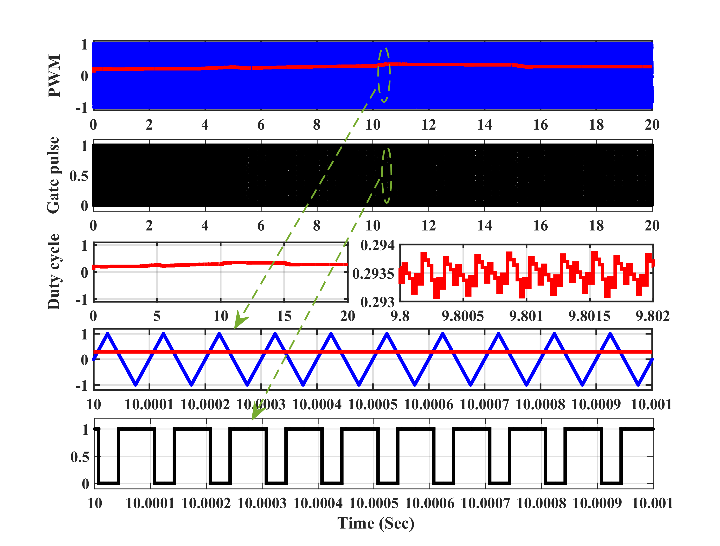
In a practical microgrid, the local converter cannot depend only on a fixed droop slope when storage units age differently, experience different SoC levels, or carry switching load changes. The pure-droop performance matrix captures the baseline behavior through duty-cycle, PWM, carrier, and gate-pulse signals. The pseudo-centralized response adds intermittent peripheral SoC information while retaining local voltage and current sensing, allowing the controller to coordinate two battery units without continuous centralized communication.
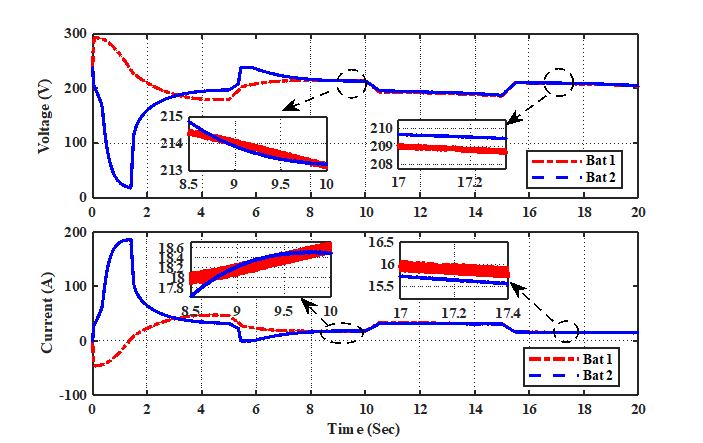
For visitors exploring smart-grid collaboration, the message is that resilient microgrids need a bridge between architecture-level planning and deployable converter control. The work connects review-level knowledge of microgrid types and hierarchy with laboratory-oriented SoC equalization, voltage-current balancing, and PWM-ready decision-making.
- Resilient microgrid control
- Stability under renewable intermittency
- Real-time feasibility studies