Prediction, equalization, and deployable storage control
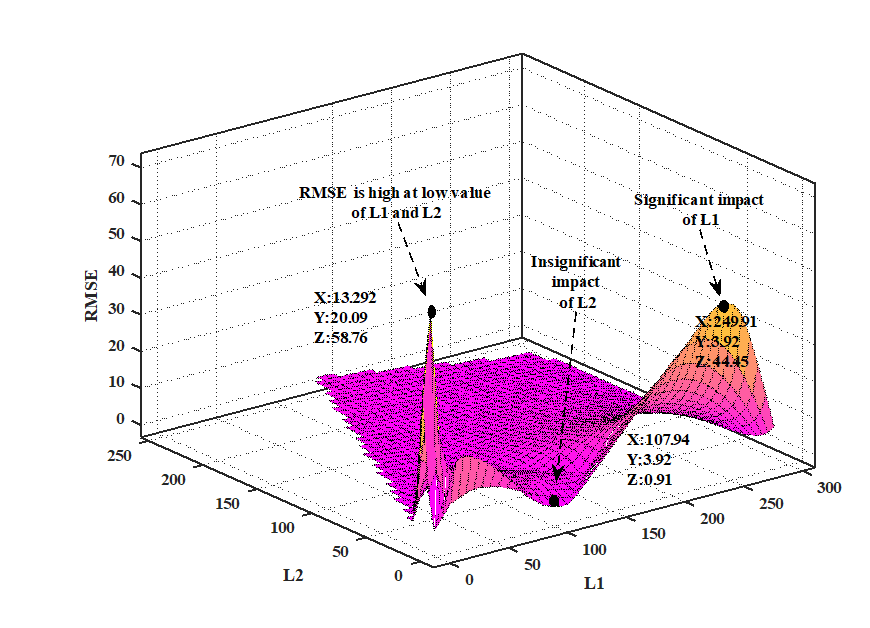
The battery-storage story follows two linked questions: how accurately remaining energy and lifecycle behavior can be predicted, and how that prediction can guide coordinated battery-unit operation. The visuals move from model tuning to duty-cycle decisions and finally to voltage-current balancing.
The tri-layer WNN surface visualizes how model structure affects RMSE when predicting SoC and lifecycle-related behavior under degradation-aware characterization. The SoC droop-control figures move from model training into control action: hyperparameter planes show how WNN performance is shaped, duty-cycle prediction explains how model output becomes a converter command, and the voltage-current response confirms whether two battery units are moving toward balanced operation.
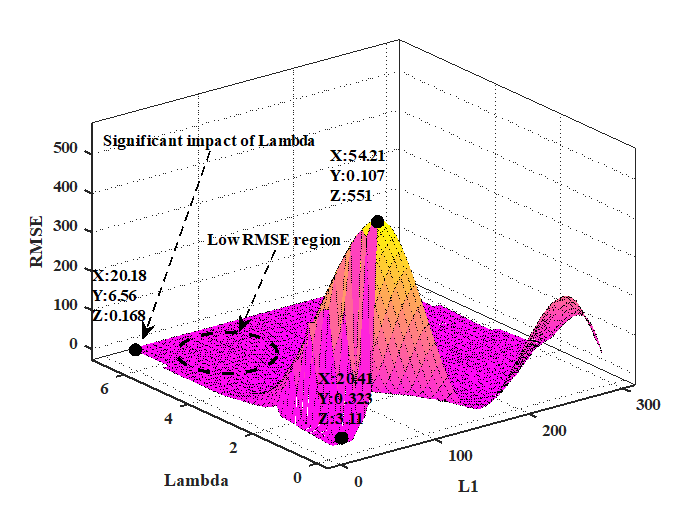
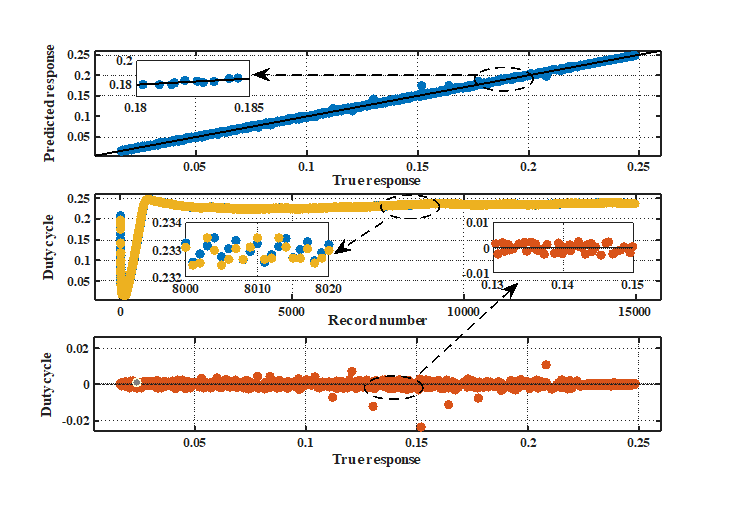
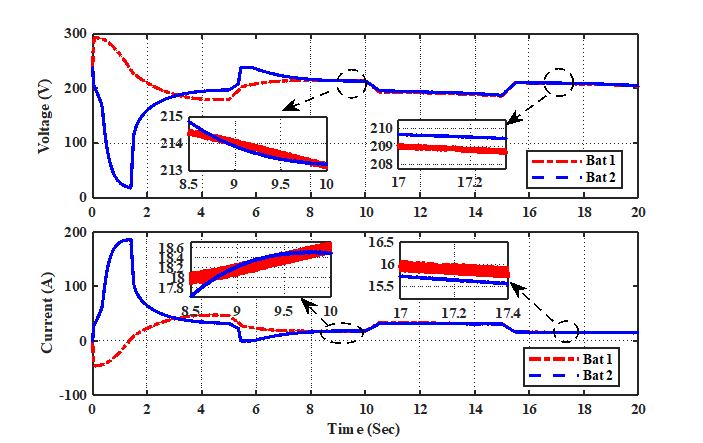
This domain is therefore not limited to battery monitoring. It links characterization, machine-learning model selection, controller decision-making, and experimental validation. For a PhD scholar or collaborator, it creates space for degradation-aware SoC estimation, equalization-speed improvement, embedded BMS validation, lifecycle analytics, and storage-aware microgrid operation.
- Fast coordinated equalization
- Battery health analytics
- Embedded BMS validation